
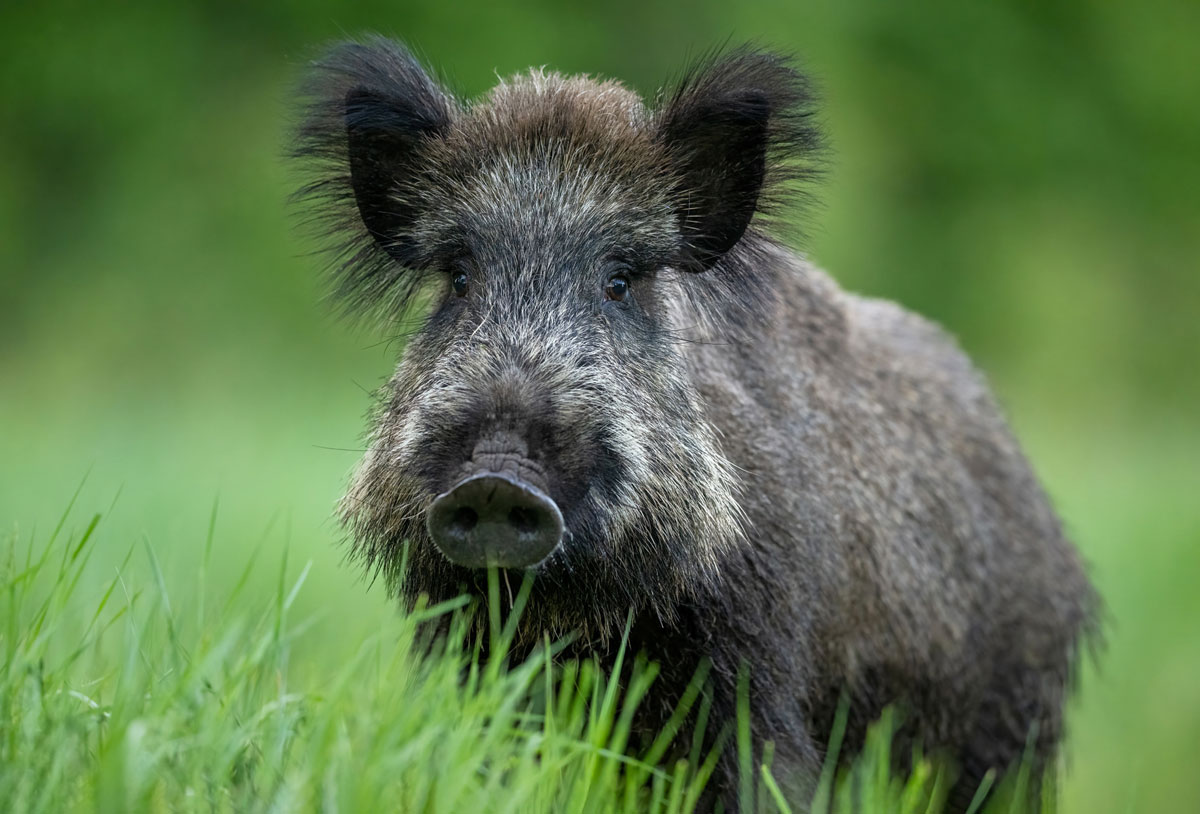
According to Finnish Food Authority (Ruokavirasto), African swine fever (ASF) was confirmed in a wild boar found dead in Virolahti, South-Eastern Finland, on 30 July 2026. ASF is a highly contagious animal disease that is subject to mandatory control measures. Finnish Food and Drink Industries’ Federation ETL emphasises that the disease does not pose food safety risk and cannot be transmitted to humans.
Following the detection, the authorities immediately introduced disease control measures. Finnish Food Authority established a restricted zone around the affected area, where the movement of pigs is limited and surveillance of ASF in wild boar has been intensified.
The restrictions within the zone concern, among other things, the movement of production pigs, access to forests, forestry work, the use of grain and feed materials, and hunting. These measures are intended to contain disease within the restricted area.
Finnish Food Authority provides up-to-date information on the disease, its occurrence in Finland, the control measures in place and food safety.
Every effort being made to prevent the disease from reaching pig farms
The entire Finnish food chain is doing everything possible to prevent ASF from spreading to commercial pig farms. An outbreak in domestic pig production would cause substantial losses for the pig sector.
ASF has never been detected in Finnish commercial pig farms or anywhere in the food chain. This latest case was found only in a wild boar.
ASF does not infect humans and does not cause illness in people. Finnish pork and pork products therefore remain completely safe to eat and export.
The animal health status of Finnish livestock also continues to be excellent. Finnish pork is virtually free of salmonella, and the use of antibiotics in pig production remains exceptionally low.
Possible export restrictions would harm the meat industry
The most significant economic impact of African swine fever on the Finnish meat industry would come through possible restrictions on international trade. Trading partners often impose nationwide import restrictions when animal diseases are detected, and such restrictions may remain in place for years even after a country has regained its disease-free status.
Such restrictions would be highly unfortunate and damaging for Finnish food exports and ongoing export efforts.
Most Finnish pork exports destined for markets outside EU
Finland has approximately 600 pig farms, most of them located in South-Western and western Finland. In 2025, Finland produced approximately 164 million kilograms of pork, while domestic consumption totaled around 156 million kilograms.
Finland exported approximately 23 million kilograms of pork in 2025, with a total export value of around EUR 74 million. Exports of pork to countries outside the EU were worth approximately EUR 57 million.
The combined export value of pork and other parts of the pig carcass from Finland totaled approximately EUR 94 million in 2025. Exports to non-EU countries accounted for around EUR 76 million.
Around 80 per cent of exports were destined for markets outside the European Union.
The largest export destinations for pork and other parts of the pig carcass were South Korea (EUR 22.6 million), China (EUR 18.1 million), New Zealand (EUR 14.6 million), Poland (EUR 7.0 million) and Japan (EUR 6.5 million). Finnish pork is also exported to Sweden, Norway, Estonia and Lithuania, among other countries.
Read more on the Finnish Food Authority’s website
Further information in ETL