Press release
Foreign-born employees are part of everyday working life in Finnish food industry
Published:

Published:
Workplaces in the Finnish food industry have become increasingly international in a relatively short period of time. Employers and employees want to work together to build workplace communities where everyone feels welcome, regardless of their background. In September, the topic brought together industry’s employers’ and employees’ organizations for their first joint forum on the future of working life.
Employees with international backgrounds are already an established part of the Finnish food industry. According to Statistics Finland, they accounted for 11.1 per cent of people employed in the industry in 2023, compared with 4.1 per cent in 2010.
The internationalization of food industry workforce has progressed rapidly, although there are considerable regional differences. The overall trend is clear: an increasingly international workforce will be part of the industry’s future.
At the same time, workplaces in the food industry have become increasingly multicultural and multilingual. Diversity is already part of working life today, rather than simply a question for the future.
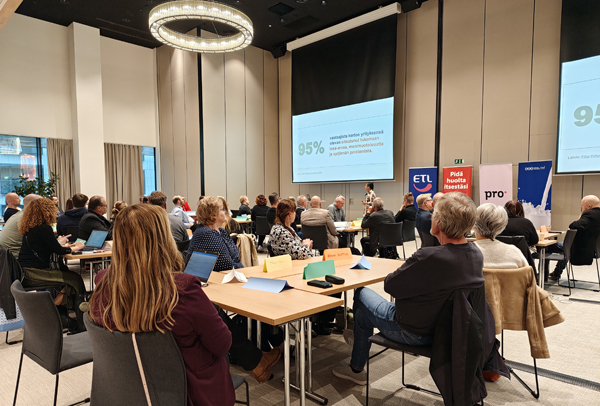
At the first joint future forum in Helsinki organized by employers’ and employees’ organizations in the food industry, participants discussed what increasingly international workplaces mean in practice and how to build successful multicultural workplace communities.
Food industry is essential to Finland’s security of supply and will continue to need skilled employees in the future. Alongside ensuring the availability of skilled workers, it is important to make sure that workplaces are safe and supportive communities for everyone.
The forum featured presentations on skills and talent in the food industry and on multicultural workplace communities, as well as practical examples of how companies can strengthen employees’ sense of equality and belonging in the workplace.
Successful multicultural workplace communities are built through everyday practices. These include good induction, effective communication and clear, shared ways of working. Everyone in the workplace should be treated equally and with respect. Responsibility for treating others well and following agreed practices belongs to every member of the workplace community.
Employers’ and employees’ organizations consider it important to discuss the internationalization of industry and multicultural working life together. A well-functioning workplace community is built on shared understanding and cooperation, involving employers, supervisors and employees alike.
What Future Forum?